Last updated November 18, 2026






Free written scope consultation - allowances, timeline, and change-order rules on paper before a single trade is scheduled
Construction Emergency Preparedness Guide for Grand Prairie Homes
When a February 2021 ice storm cracked water mains across North Texas, the Grand Prairie homeowners who got contractor callbacks first weren’t the ones who called loudest. They were the ones who already had a written service relationship and a documented record of their home’s condition. That single fact separated a stressful week from a catastrophic month. This guide gives you the same advantage before the next hailstorm, freeze, or drought-to-rain foundation shift hits. We’ll cover the three emergencies Grand Prairie homes actually face, how to build a condition baseline, what Texas insurance covers (and what it won’t), ten-minute contractor vetting, and why a written agreement beats surge pricing every time.
Quick Answer
The best time to prepare for a construction emergency in Grand Prairie is before it happens: photograph and document your home’s baseline condition, keep a written service agreement with a contractor you’ve vetted, and store your insurance policy’s construction-claim language where you can find it fast. When a real emergency hits – hail breach, foundation movement, freeze damage – the homeowner with documentation recovers faster and pays less than one starting from scratch. Preparing takes a weekend and costs nothing; scrambling after a storm can cost thousands.
Styles & brands we work with
- Kitchen remodeling
- Bathroom remodeling
- Home additions & ADU
- Roofing
- Windows & doors
- Driveway & pavers
- Fence
Table of Contents
- The Three Grand Prairie Construction Emergencies (and How to Triage Each)
- How to Build Your Home Condition Baseline Document
- What Texas Insurance Covers vs. What It Denies
- Vetting a Contractor in 10 Minutes When Time Is Short
- How Storm-Chaser Contractors Operate in Grand Prairie
- Why a Written Service Agreement Prevents Surge Pricing
- Common Mistakes to Avoid
- Frequently Asked Questions
The Three Grand Prairie Construction Emergencies (and How to Triage Each)
Grand Prairie sits in a collision zone. Warm Gulf moisture runs north and meets cold air off the plains right over the Metroplex, which is why the city’s hail season runs hard from March through June. Clay-heavy soils expand and contract with the region’s drought-to-flood rainfall swings. And the hard freezes that hit in January and February – like the 2021 event that cracked mains across the city – stress pipes and exterior assemblies in ways most homes here aren’t built to absorb.
Here’s how to triage each scenario in the first hour.
1. Hail and Wind Roof Damage
Hail doesn’t always punch a visible hole. Often it fractures the mat under the shingle granule layer, and the leak shows up weeks later near a valley or chimney. Triage steps:
- Get on the ground and look up. Don’t climb the roof. Check for missing shingles, dents in gutters and downspouts, and granule piles at downspout outlets.
- Photograph every slope of the roof, gutter line, and any soft-metal vent or AC condenser coil from the ground.
- Check the attic (with a flashlight, from the hatch) for active drips or wet decking after the storm passes.
- If you see water intrusion, place buckets and move valuables. Call a roofer for a tarp – a real roofer, which we’ll cover below.
2. Foundation Movement After Drought-to-Rain Cycles
Grand Prairie’s soils are mostly expansive clay. A dry summer pulls moisture out and the clay shrinks; a wet fall pushes it back and it swells. That cycle opens hairline cracks that widen over time. Triage:
- Look for cracks wider than a quarter inch, especially diagonal stair-step cracks at brick corners or above door frames.
- Check whether doors and windows that used to close easily now stick. That’s a signal of differential movement, not just humidity.
- Photograph any new cracks with a ruler or coin for scale, and date the photo.
- Don’t panic-level. A foundation crack that isn’t moving isn’t necessarily structural. A structural engineer can tell the difference for a few hundred dollars.
3. Freeze-Related Pipe and Exterior Damage
When a hard freeze hits, the pipe that bursts is almost never the one you can see. It’s the one in the exterior wall cavity, the attic run, or the hose bib. Triage:
- If you lose water pressure or hear a running-water sound with all fixtures off, shut off the main immediately.
- Open cabinet doors under sinks on exterior walls and trickle a faucet during the freeze event itself.
- Inspect exterior siding and trim for swelling or separation after the thaw. James Hardie fiber cement and wood trim both telegraph hidden water damage this way.
- Photograph the shut-off valve and meter location now, so you’re not hunting for it at 3 a.m. in freezing weather.
How to Build Your Home Condition Baseline Document
A condition baseline is a dated, organized record of what your home looked like and how it performed before any emergency. It’s the single most useful document you can hand an insurance adjuster or a contractor’s scope writer. We’ve watched claims go from “we’ll see what we can do” to “approved” purely because the homeowner had a pre-storm photo set.
Build it in one afternoon. Here’s what goes in:
- Dated photo set. Every exterior wall, the full roof from four ground angles, the attic decking, the foundation perimeter (all four sides), and every room’s ceiling and walls. Name the files by date and location.
- Measurement sheet. Note the roof’s stated age from your last inspection report, the square footage, the exterior material (James Hardie, brick, vinyl), and the make and model of your HVAC condenser.
- Prior repair records. Receipts and invoices for anything – a roof patch, a foundation inspection report, a plumbing repair. Each one establishes the home was in good condition when the emergency hit.
- Insurance policy section. Photograph the declarations page and the specific “sudden and accidental” language in your Texas homeowners policy. Highlight the claim contact and the deductible.
- Contractor contact card. The name and number of a general contractor you’ve vetted, written and stored with your documents, not just in a phone.
A good general contractor will build much of this during a routine walkthrough. That’s one reason we encourage homeowners to call for a paid or free inspection – the documentation lives on file, ready when you need it. You can see how we approach a whole-home assessment on our General Contractor in Grand Prairie page.
What Texas Insurance Covers vs. What It Denies
Texas homeowners policies generally cover sudden and accidental damage from a covered peril: hail, wind, fire, and a burst pipe caused by a freeze. They generally do not cover gradual deterioration – rot from a slow leak, settlement from years of unaddressed foundation movement, or damage from deferred maintenance. That distinction is the entire ballgame after an emergency.
The language that decides your claim is usually a single phrase: whether the damage can be traced to one event or to years. Here’s what protects you:
- A pre-event condition record. If you can show the roof was intact in March, the adjuster can’t argue the missing shingles in April were long overdue.
- Prompt written notice to the carrier. Report within days, not weeks. Use the carrier’s online claim portal so you have a timestamp.
- Itemized scope from a contractor. A written price with line items – not a round figure – lets the adjuster match your claim to labor and material.
- Engineer’s report for foundation claims. Texas carriers frequently deny foundation claims as “settlement.” A structural engineer’s written opinion that movement was triggered by a specific event (a plumbing leak, a single freeze) often turns a denial into a paid claim.
One more: your policy likely has a separate wind/hail deductible, often a percentage of the dwelling value rather than a flat dollar amount. Know that number before the storm, not after. Our Bradford Remodeling Co Grand Prairie home page lays out how we build written scopes that adjusters can work with directly.
Vetting a Contractor in 10 Minutes When Time Is Short
When there’s water coming through the ceiling, you don’t have time for a background check. So you do two things: cut the emergency and buy time. Here’s what actually verifies in ten minutes, and what can wait.
Verify now
- State licensing where it applies. Texas requires a plumber or electrician working on your home to hold the proper state license. Ask for it and match the number to the name on the quote.
- Written scope and price before work. Any contractor who won’t put the price on paper before a tool comes out is a red flag, no exceptions. A real pro gives you a number, in writing, up front.
- Live phone coverage. Call the number and see who answers. A voicemail box after a hail storm is a tell.
- Proof of insurance. Ask for the certificate. The crew performing the work should be insured as their state requires.
Can wait a day
- Review the contractor’s online reputation and references.
- Confirm the roster of name-brand materials – for example, GAF or CertainTeed for roofing, James Hardie for siding, Therma-Tru for exterior doors.
- Check whether the warranty is written and how long it lasts.
- Compare the full quote against a second bid once the emergency has passed.
At Bradford Remodeling Co Grand Prairie, every job gets a written price before work starts and a live person on the phone 24/7. That’s not a slogan, it’s the way we’re set up, and it’s the standard we’d want you to hold any contractor to.
How Storm-Chaser Contractors Operate in Grand Prairie
After a major hail event rolls across Grand Prairie, out-of-state trucks appear within days. They knock on doors, offer a “free” inspection, and quote a roof replacement at a price that sounds unbeatable. A handful are legitimate. Many aren’t.
The pattern is consistent. The chaser takes a deposit or collects the insurance check and does the tear-off, then leaves. If the roof leaks three months later, the phone number is disconnected. The crew that did the work is unknown. The written guarantee, if there was one, has no address behind it.
A few things to check when a stranger offers to work on your roof the week after a storm:
- Ask for a Texas physical address. A local general contractor has one. A storm chaser has a hotel.
- Insist on a written scope and price before signing anything. Vague bids like “we’ll handle the roof” are how claims get padded.
- Never sign an assignment-of-benefits (AOB) contract. That document hands your insurance claim over to the contractor. You lose control of the settlement.
- Request the manufacturer warranty in writing. Roof systems installed to spec with GAF or CertainTeed products carry a manufacturer warranty that follows the material. A chaser can’t deliver that.
Grand Prairie homes have a documented roster of brand-name materials available on every legitimate install. If the contractor can’t name the manufacturer and can’t produce a warranty document, walk away.
Why a Written Service Agreement Prevents Surge Pricing
Here’s the thing about emergency pricing: after a hailstorm, every roofer in North Texas is booked out weeks. Demand spikes, supply doesn’t move, prices climb. That’s the market, and no honest contractor can promise a fixed rate during a surge they can’t predict. But a written service agreement changes the equation.
What a pre-emergency agreement with a known contractor should specify:
- Response terms. Not a promise of same-day arrival during a surge, but a clear understanding of where you are in the queue and who to call.
- Written pricing before any work – including a stated labor rate and material pricing method, so the number doesn’t move once work is underway.
- The warranty, in writing. Every completed Bradford project carries the 365-Day Done Right Promise. If the work fails inside that full year, we come back and correct it at no charge.
- Brand specification. Which cabinetry, surfaces, fixtures, doors, and exterior products are approved for your home, so a post-emergency repair matches the rest of the house.
- Background-checked technicians. You know who’s coming. No strangers at the door.
A written agreement doesn’t lock in a discount. It locks in a relationship – a contractor who has your file, your baseline, and your expectations on paper before the crisis. Calls are answered by a live person 24/7, and there’s no voicemail queue in the middle of a plumbing disaster.
Common Mistakes to Avoid
- Climbing the roof to “check the damage” yourself. Hail-damaged shingles are slick and steep-roof work is one of the leading causes of serious injury in home repair. Inspect from the ground and let a trained professional get on the roof.
- Signing a repair contract on the spot the day after a storm. Take the written quote, read it, and sleep on it. A legitimate Grand Prairie contractor will not pressure you to sign same-day.
- Reporting the claim weeks after the event. Texas carriers can deny late claims, and time-stamping through the portal protects you. Report within days of the damage.
- Assuming the foundation crack isn’t anything. A hairline crack that appeared suddenly after a freeze or a plumbing leak is different from an old, stable one. Get an engineer if in doubt.
- Forgetting the wind/hail deductible. Grand Prairie policies often have a percentage deductible that’s much higher than the standard deductible. Budget for it before replacing the roof.
- Hiring a contractor with no written guarantee. If the promise is verbal, it doesn’t exist after the crew pulls away. Ask for the warranty in writing.
- Ignoring the hidden freeze damage. A pipe that froze but didn’t burst can still have a hairline split. After a deep freeze, check the meter after shutting all fixtures and let a licensed plumber look at any soft spots.
See the difference
 Before
 After
 Before
 After
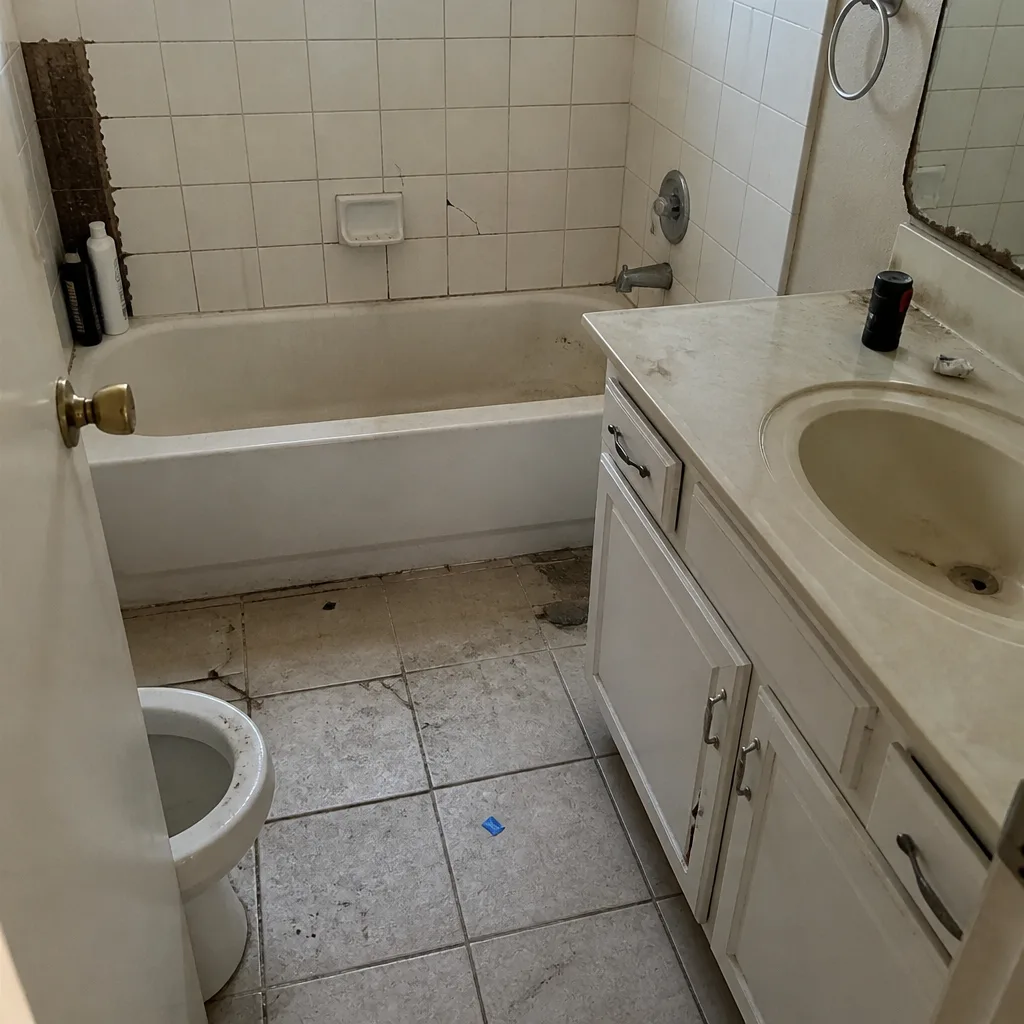 Before
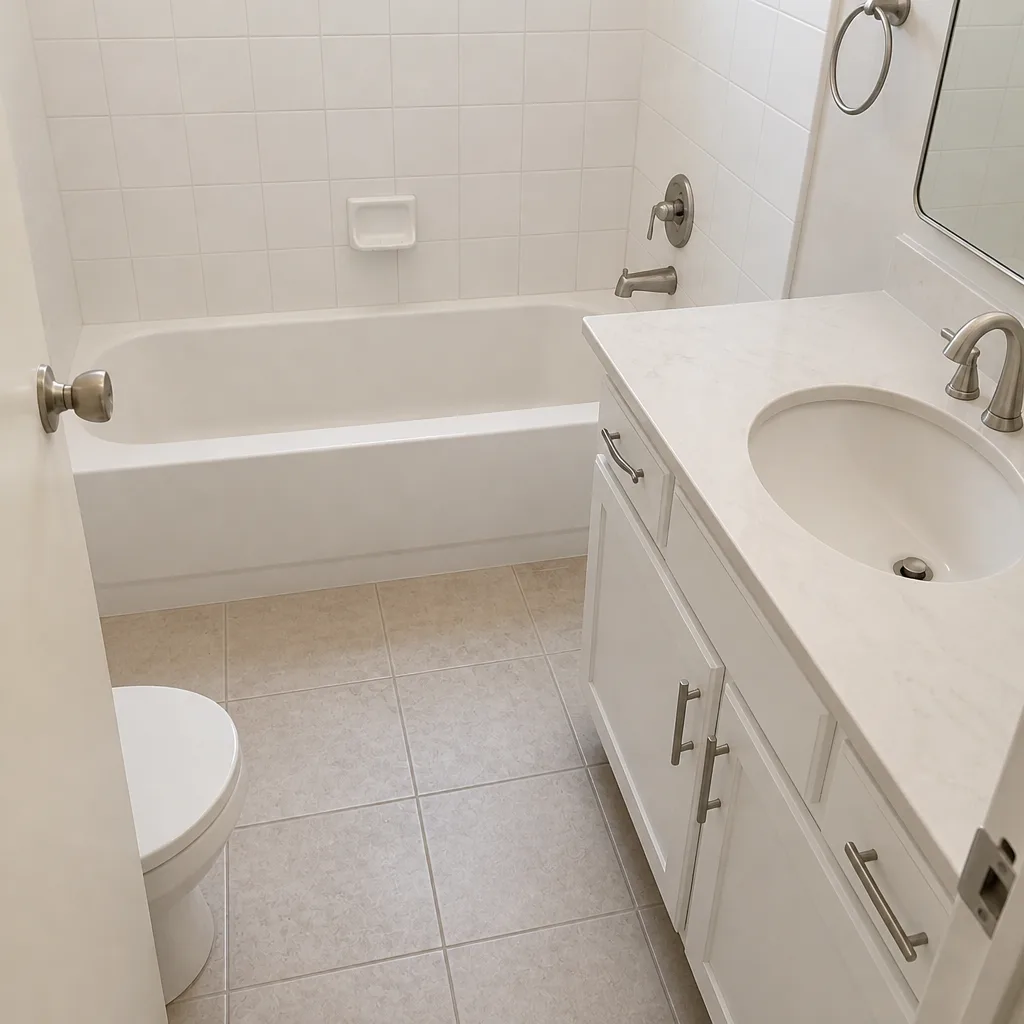 After
When to Call a Professional
Some jobs you can handle yourself – a bucket under a drip, a photo set from the ground, a call to the insurer. Others need a trained pro, and a few are genuinely dangerous. Call a professional if the roof has visible damage and any active leak, if a pipe has burst or the water main won’t shut off, if a foundation crack is wider than a quarter inch or new since the last inspection, or if exterior siding and trim are swollen or separating after a freeze. Never attempt roof work, foundation work, or plumbing repairs in a wall cavity on your own. Bradford Remodeling Co Grand Prairie offers free estimates in Grand Prairie – call (888) 255-7593 to schedule one and get a written price before any work begins.
Frequently Asked Questions
First, stay off the roof and photograph it from the ground – every slope, the gutters, and any soft-metal vents. Then check the attic for active drips, and report the claim to your insurer the same day through their online portal so you have a timestamp. Only after that do you call a roofer for a tarp or inspection. Call (888) 255-7593 for a free estimate once the active water is under control.
Generally no – Texas policies cover sudden and accidental damage, not gradual deterioration, and a foundation crack from years of drought-to-rain soil movement is usually treated as gradual. The exception is movement triggered by a specific covered event such as a sudden plumbing leak. A structural engineer’s written opinion is often what turns a denial into a paid claim. Call (888) 255-7593 to schedule a free site review and a written estimate.
Storm chasers typically have no Texas physical address, won’t put a scope and price in writing before work starts, and ask you to sign an assignment-of-benefits contract that hands your insurance claim to them. A legitimate contractor will give you a local address, a written line-item price, and a manufacturer warranty document. If any of those are missing, walk. Call (888) 255-7593 to see what a written quote from a Grand Prairie contractor looks like.
A written price usually takes one site visit, which happens within days of your call, not weeks. The estimate itself is typically delivered the same day or the next business day, itemized by material and labor. No numbers should move once the written quote is signed. Call (888) 255-7593 to schedule your free estimate.
No – if a pipe burst inside a wall cavity, the repair involves opening the wall, checking the substrate for water damage, and re-running the water line, which is plumbing work that requires a licensed plumber in Texas. A visible shut-off valve you can turn yourself is fine; anything beyond that is a job for a trained professional. Call (888) 255-7593 to schedule a free estimate and a written scope.
A service agreement is what you sign before an emergency – it names the contractor, the pricing method, and the response terms. A warranty is what covers the work after it’s done – the 365-Day Done Right Promise means Bradford returns and corrects the work at no charge if it fails within a full year. Both belong on paper in your baseline document. Call (888) 255-7593 for a free estimate and a written warranty on every job.
The Bottom Line
Grand Prairie’s construction emergencies follow a pattern – hail from the Gulf, foundation movement from clay soils, freeze damage from the north. The homeowner who has a dated photo set, a written contractor relationship, and their insurance policy’s claim language at their fingertips recovers faster and pays less than one starting from zero. Your job before the next storm is simple: build the baseline, vet the contractor, and get the guarantee in writing. Everything else is a phone call. Call (888) 255-7593 for a free estimate and a written price before any work begins.
Written by the team at Bradford Remodeling Co Grand Prairie.