Last updated November 18, 2026





Free written scope consultation - allowances, timeline, and change-order rules on paper before a single trade is scheduled
Bathroom Remodeling Warning Signs Every Homeowner Should Know
If a contractor is hanging drywall before the rough-in inspection is approved, the inspector will make them open it back up – and that cost lands on you if your contract doesn’t address it. That single sentence explains why so many Grand Prairie bathroom remodels go sideways: the failure isn’t the tile or the vanity, it’s that the work happened in the wrong order. We’ve watched homeowners pay twice for the same wall because nobody mapped the trade sequence before demo day. This guide walks you through the correct order every step of the way, so you can spot a skipped step while it’s still cheap to fix.
Quick Answer
The biggest bathroom remodeling red flags are out-of-order work, skipped waterproofing, a contractor who claims no permit is needed, a substituted crew you weren’t told about, and final payment released before the punch list is closed. If you know the correct trade sequence, you can spot a problem in progress instead of discovering it a year later. A permit, a written scope, and a holdback on final payment protect you more than any handshake ever will.
Styles & brands we work with
- Kitchen remodeling
- Bathroom remodeling
- Home additions & ADU
- Roofing
- Windows & doors
- Driveway & pavers
- Fence
Table of Contents
- The Correct Trade Sequence for a Bathroom Remodel
- The Waterproofing Skip: Why Rushing to Tile Is the Biggest Red Flag
- “We Don’t Need a Permit”: What Actually Requires One in Grand Prairie
- Mid-Project Substitution: When a Different Crew Shows Up
- Punch List Abandonment: How to Structure Final Payment
- More Warning Signs to Watch For in Grand Prairie
- Common Mistakes to Avoid
- Frequently Asked Questions
The Correct Trade Sequence for a Bathroom Remodel
Every bathroom remodel follows the same order whether it’s a 5×8 hall bath or a primary suite with a walk-in shower and freestanding tub. If you can recite this sequence, you can spot a red flag the same day it happens. Here’s the order, and the two places where inspections are supposed to hold the job:
- Demolition – remove old tile, fixtures, flooring, and drywall back to studs and subfloor. Don’t be surprised if they find moisture damage behind the shower. In older Grand Prairie neighborhoods, wood framing and drywall near a decades-old shower are commonly soft.
- Rough plumbing – new drain lines, supply lines, and the shower valve body (which sets the depth of your finished valve later, so it must go in before tile).
- Rough electrical – wiring for vanity lights, exhaust fan, GFCI outlets, and any heated-floor circuit. The exhaust fan ductwork goes in now, not after drywall.
- Inspection hold – rough plumbing and rough electrical are inspected before anything is sealed up. This is the step that matters most.
- Waterproofing – cement backer board, a waterproof membrane, and a sloped mortar bed under the shower pan.
- Backer and substrate – the surface tile adheres to. Flat, straight, and properly screwed off.
- Tile and grout – floors and walls.
- Finish plumbing – set the toilet, faucets, showerhead, and drain trim.
- Finish electrical – mount the fixtures, fan, and outlet covers.
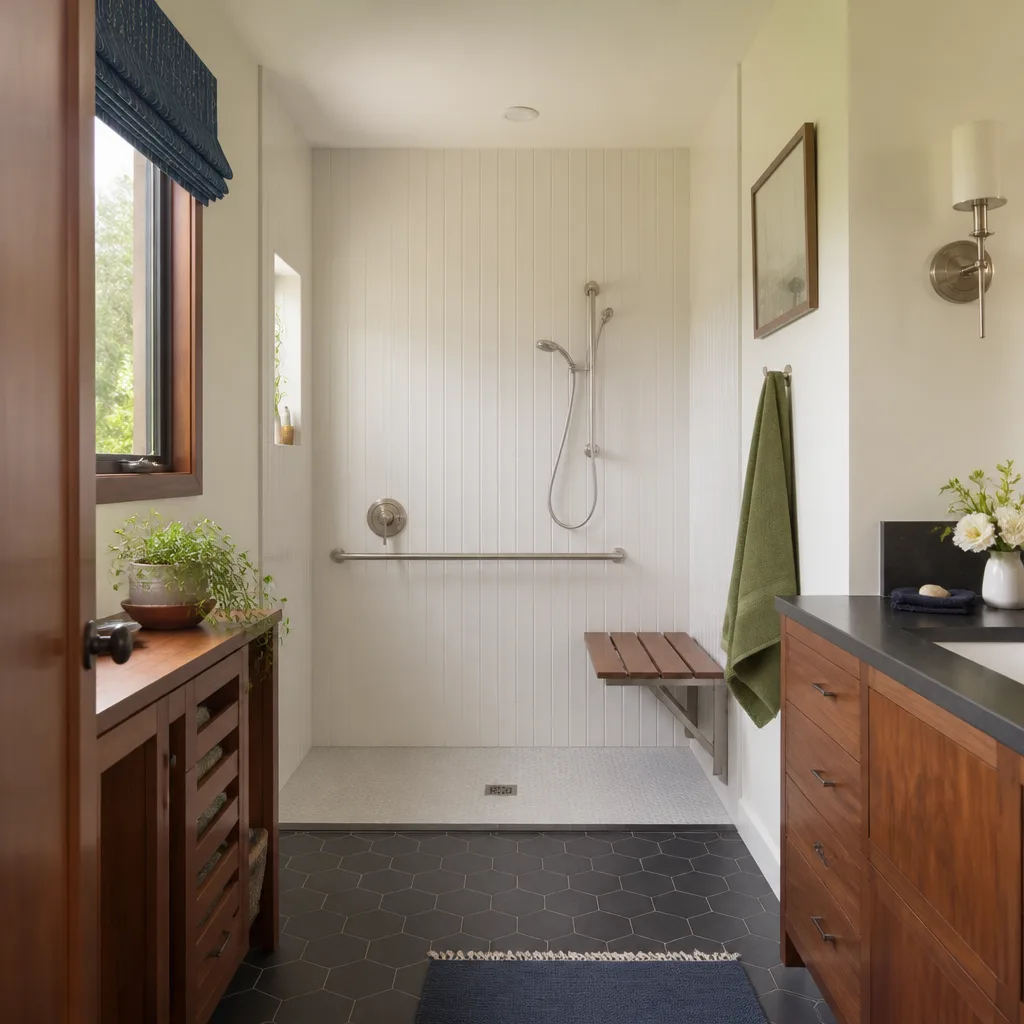
If you see drywall or backer board going up before step 4, that’s your warning sign. Everything after that point becomes guesswork. If you want to see what a properly sequenced job looks like from a bathroom remodeling in Grand Prairie project, that walk-through covers the same order.
The Waterproofing Skip: Why Rushing to Tile Is the Biggest Red Flag
The fastest way to know whether a crew is cutting corners is to ask one question before tile goes down: “Can I see the waterproofing?” A real shower waterproofing system is a visible thing – a continuous liquid membrane rolled onto the walls and pan, or a sheet membrane like a roll-on red coating. It should be a solid color, no gaps at the corners, no seams sitting where water pools, and it should wrap the curb and pan continuously. That barrier is what keeps water out of the framing 365 days a year.
What a skipped waterproofing job looks like: bare purple drywall behind the tile. The drywall is fine for a dry wall, but it fails behind a shower the first time moisture reaches it. In a Grand Prairie summer, where humidity climbs and stays, that failure happens faster than most people expect. The wall behind the tile turns soft, the tile loses its grip, and the whole thing comes down.
In our experience, a crew that’s trying to finish a shower in three days will skip the waterproofing hold time. The membrane needs to cure, the pan needs to flood-test, and that adds a day. If the crew is tiling over bare wall the morning after rough-in, ask why. It’s also the number one thing a home inspector will flag at resale, and that inspection report goes on the buyer’s side of the negotiating table.
“We Don’t Need a Permit”: What Actually Requires One in Grand Prairie
For a contractor, “we don’t need a permit for this” is the sentence that should make you stop and ask for it in writing. It’s also very often untrue. In most Texas municipalities, including Grand Prairie, a bathroom remodel generally requires a permit when you’re moving plumbing fixtures, adding or relocating electrical outlets, changing the exhaust system, or altering the framing. A true cosmetic swap – new vanity, new paint, a tile change – sometimes doesn’t cross that line. But the moment a supply line moves, the answer changes.
Here’s what unpermitted work costs you down the road:
- At resale, the disclosure. Texas sellers are required to disclose known unpermitted work. A buyer’s inspector will find it, and the deal gets held up.
- The permit retroactively pulled. Some municipalities will require the work be opened back up and inspected. That’s a wall torn out and rebuilt.
- Insurance questions. If a flood or water claim originates in an unpermitted shower, the adjuster will ask about the permit. The answer matters to your claim.
- No inspection record. The single biggest leg up on a buyer is a paper trail showing every stage was inspected and passed.
Ask your contractor for the permit number before demo. A contractor who has one will hand it to you without hesitation. A contractor who doesn’t will get vague.
Mid-Project Substitution: When a Different Crew Shows Up
On day one you meet a flooring-and-tile crew. On day nine, a different crew shows up. That’s a warning sign, not necessarily a dealbreaker, but you should understand what you’re looking at. Large remodeling companies use a stable roster of subcontractors and they have written agreements. A crew that changes with no explanation often means the original tile sub was pulled onto a bigger job, or the company took the low bid after you signed.
Your contract should say, in plain language, that the trades working on your project are either the company’s employees or named subcontractors, and that any substitution requires your written approval. It’s not a small detail. The rough plumbing in your shower is installed once, and the person doing it sets the depth of the valve that determines whether the tile sits flush. If that person is inexperienced, you find out the hard way.
You should also know who’s allowed in your house. Bradford Remodeling, as part of The Garrison Standard, uses background-checked, uniformed technicians on every job, so identity isn’t left to a job-site guess. That’s the standard to ask for in a contract, from any Grand Prairie contractor, before work starts.
Punch List Abandonment: How to Structure Final Payment
Punch list abandonment is the most common contractor failure pattern we see: the big work gets done, the crew leaves, and the last 5% – one outlet cover, a caulk bead behind the toilet, a door that won’t close right – sits unfinished for weeks. The crew gets paid on the 95% milestone and has no reason to come back.
The fix is a holdback. Structure the final payment so the contractor has a financial reason to close out the job:
- Split payments to the work. Typically: deposit, rough-in complete, tile complete, and a final 10% at closeout.
- Do not release final payment until you have the punch list signed off. The last payment is the leverage. Nothing else works.
- List every item in writing, dated, with photos. A punch list is not a text message. Put it in a document.
- Agree on a closeout date. The contract should specify a reasonable window – seven to ten days – to complete punch list items before final payment.
- Hold the paperwork. Don’t sign a completion certificate or leave a final review until the list is closed.
If your contractor objects to a 10% holdback, that tells you something. A well-run company with a written guarantee doesn’t need the money to motivate a return visit. That’s what the 365-Day Done Right Promise is for – if the repair or remodel fails inside the guarantee period, Bradford returns and corrects it at no charge, and that guarantee is in your hands before the last trim piece goes up.
More Warning Signs to Watch For in Grand Prairie
Beyond the big five, these are the signals we’ve seen turn into real problems on Grand Prairie jobs:
- No written price before work starts. If the bid is verbal and the number at the door isn’t the number on the estimate, you’re the one who absorbs the difference. A written, line-item price before any work starts is non-negotiable.
- An insulation and exhaust fan that lands in the void. The fan has to exhaust outdoors, through duct and out a roof or wall vent. A fan that dumps into the attic creates moisture problems that show up months later. Check where the duct goes.
- Materials “to be determined later.” Specifications should be named in writing. We work with a documented roster of brands – KraftMaid and Wellborn cabinetry, Cambria and Caesarstone surfaces, Kohler and Moen fixtures – so you know what’s going in before the truck arrives. If a contractor won’t name the brand of your vanity or tile, that’s a warning sign, not a negotiating tactic.
- Live-person phone coverage that only works some hours. A contractor who only texts back at 4pm is not a contractor who’s available when the water is off and the question is urgent.
- References that all sound the same. Ask for a recent Grand Prairie job you can actually drive by. A local reference who lets you look at the work is worth more than a website gallery.
If you’re planning a larger renovation and these signs show up early, they’ll show up in the general contracting in Grand Prairie work too, not just the bath.
See the difference
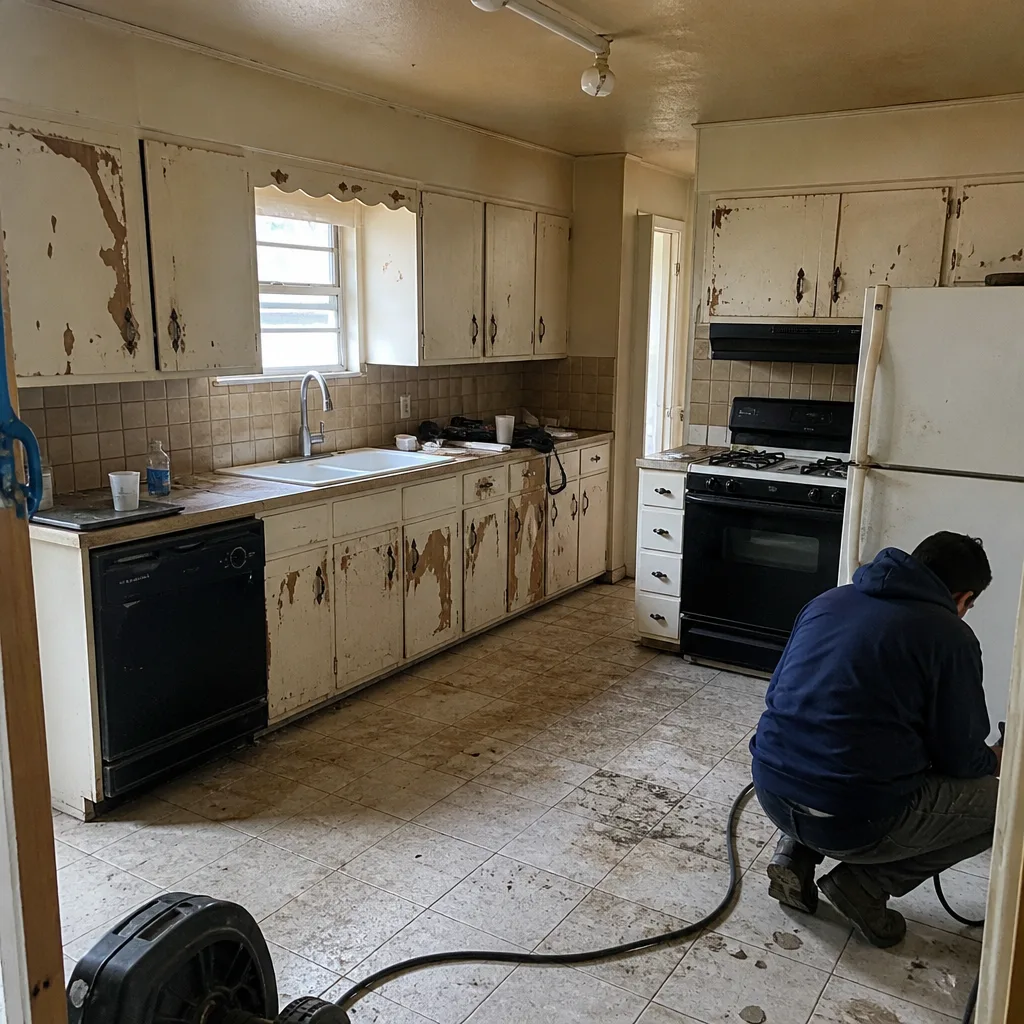 Before
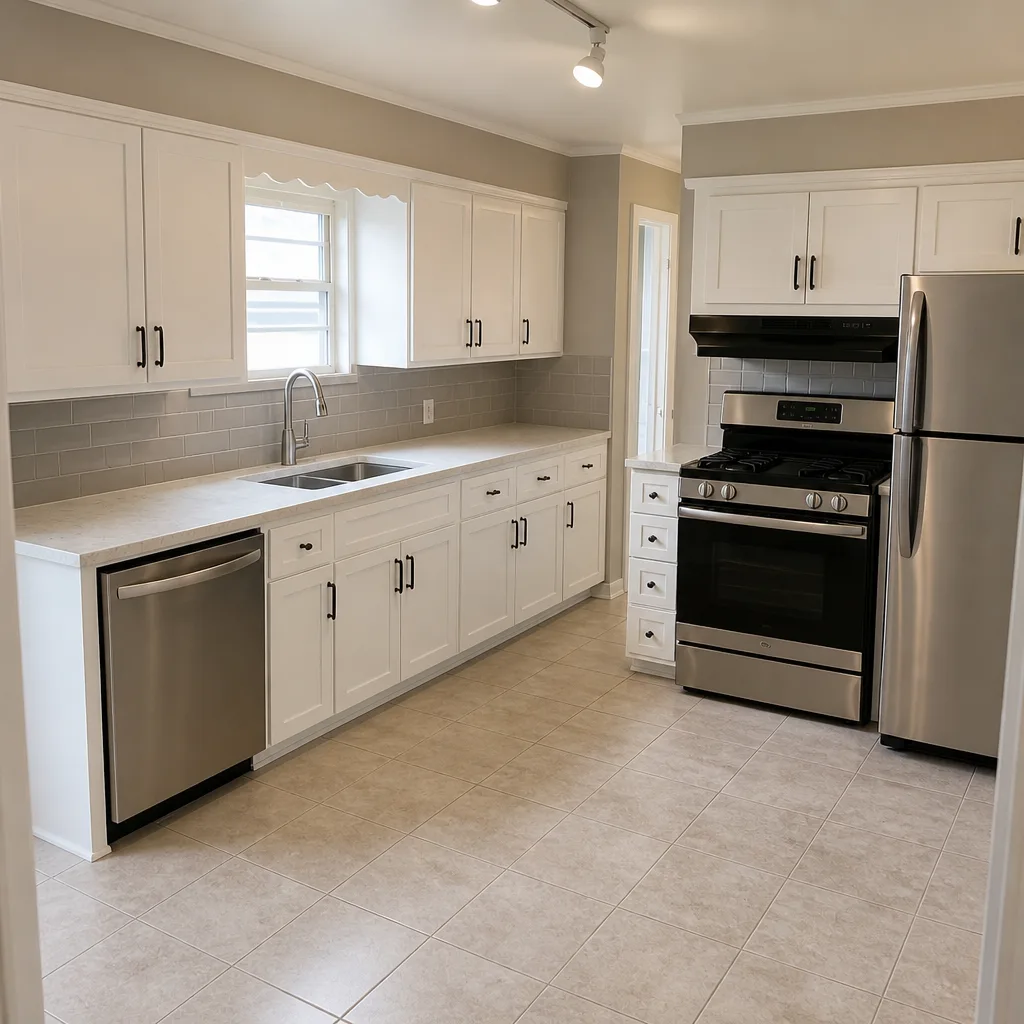 After
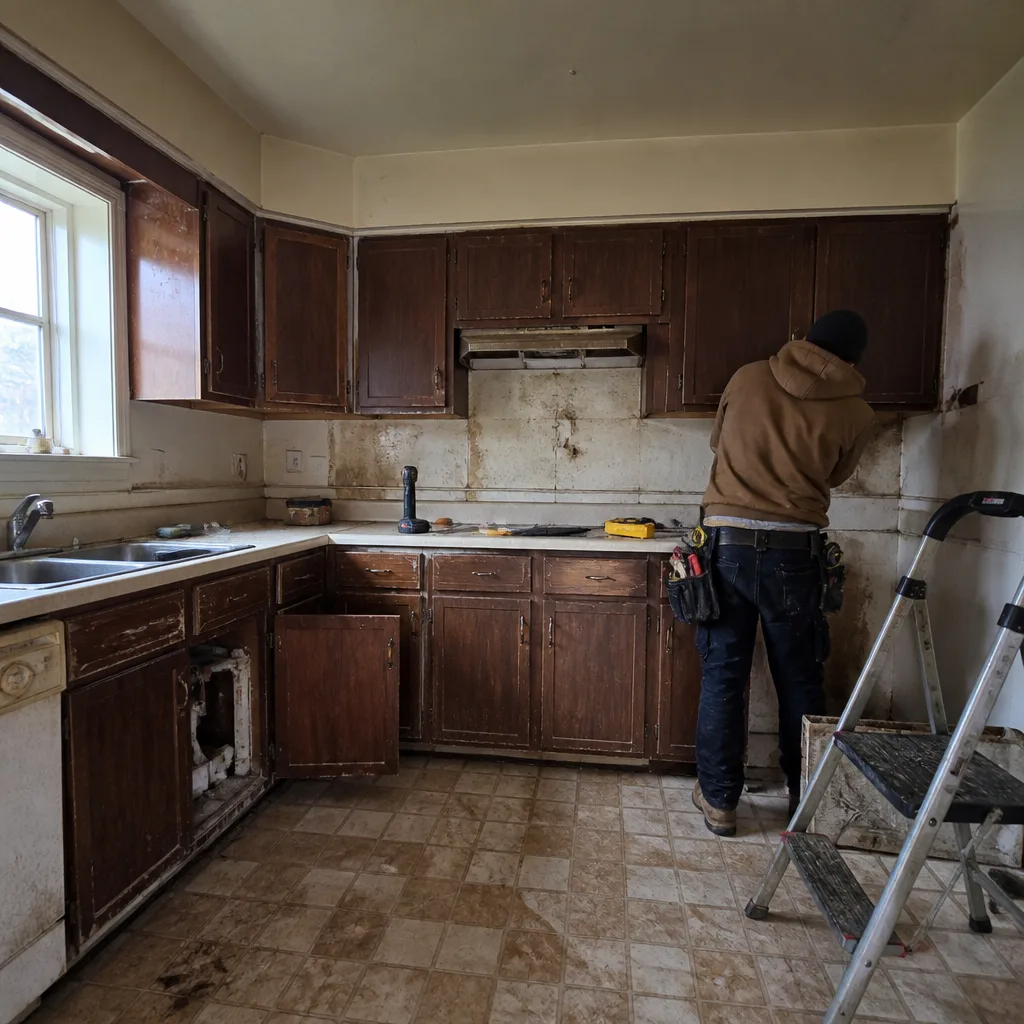 Before
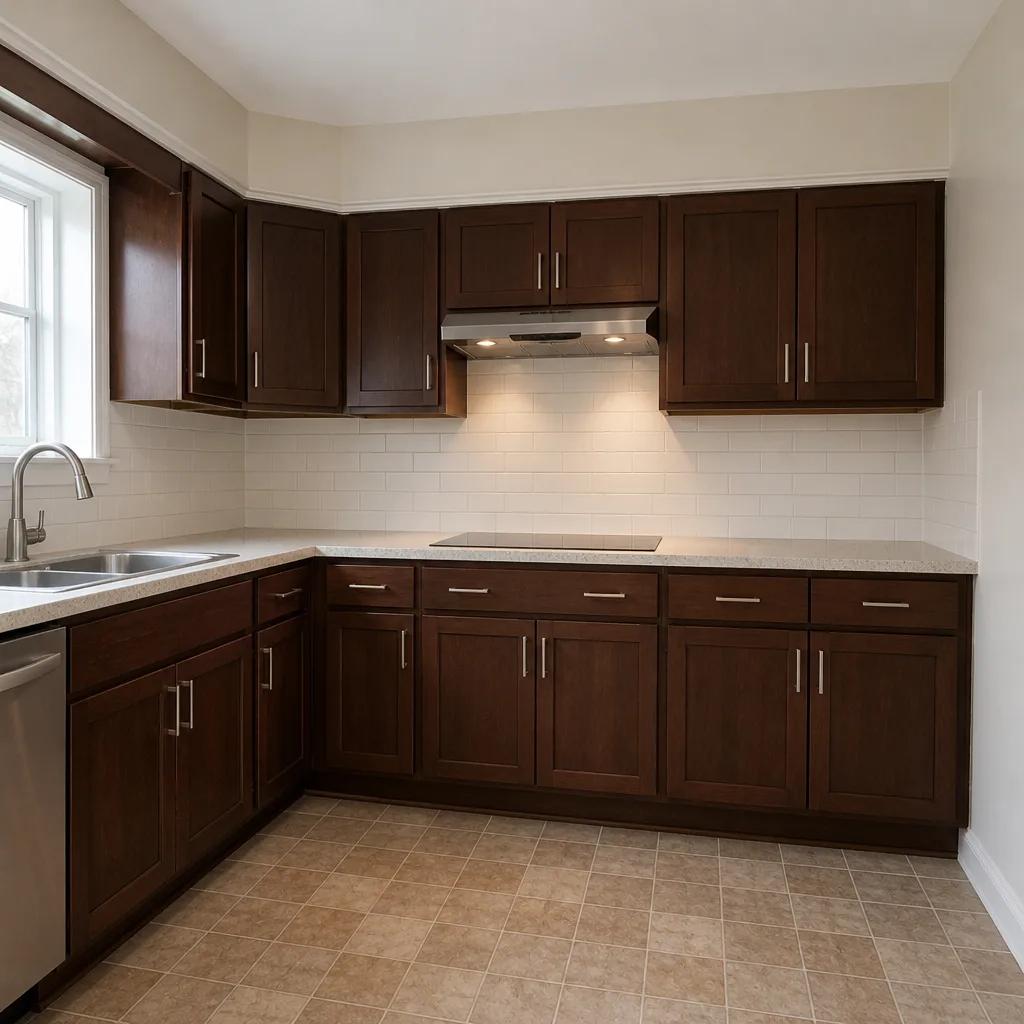 After
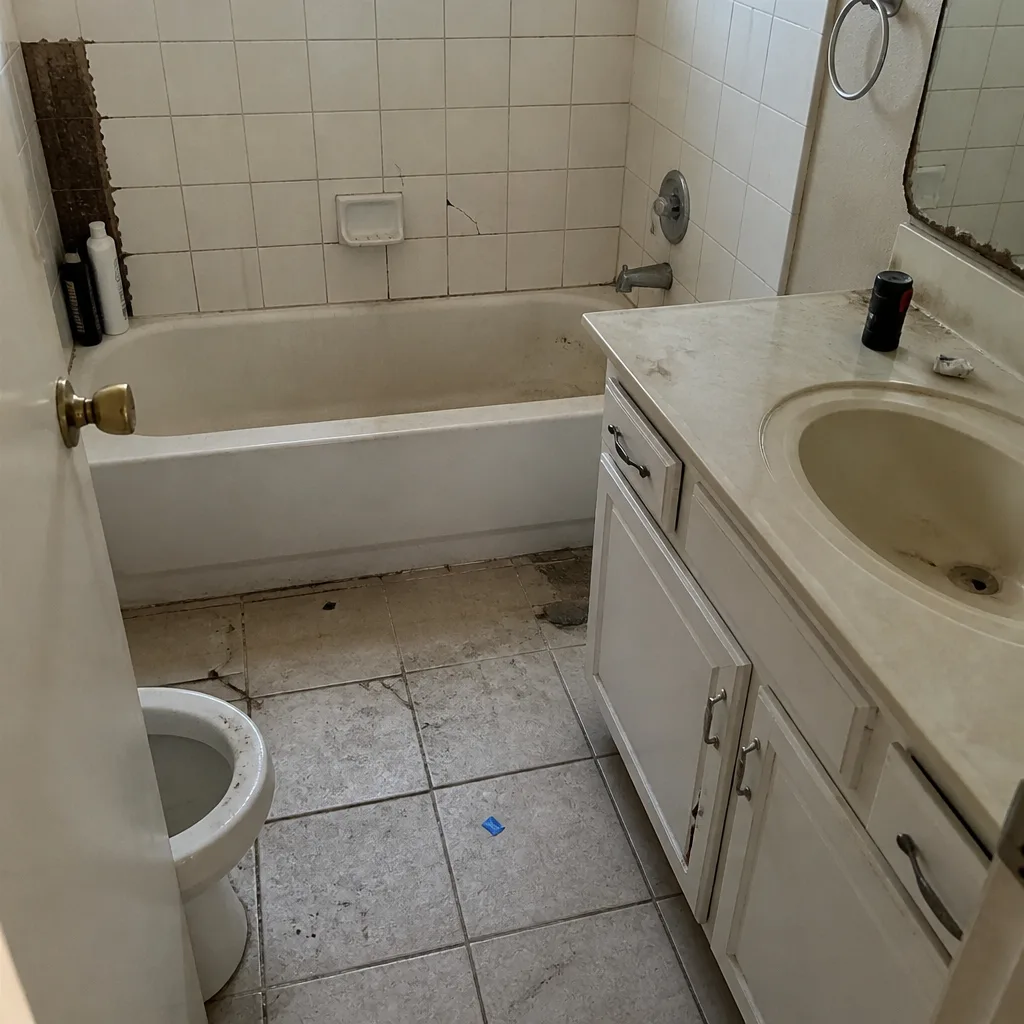 Before
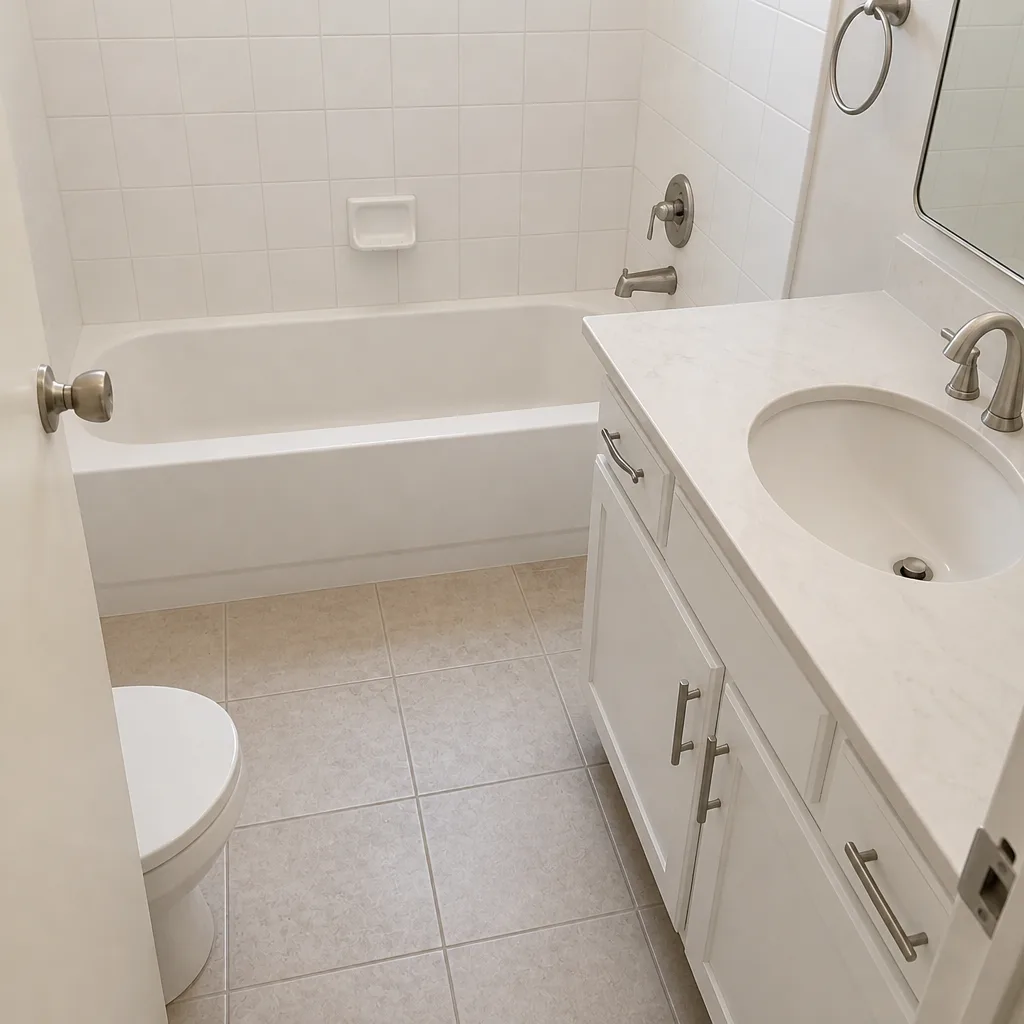 After
Common Mistakes to Avoid
- Skipping the permit to save two weeks. In Grand Prairie, the permit is the record of every inspection that passed. Save the time now and you’ll spend it later explaining the work at resale.
- Releasing final payment on the “close enough” inspection. Walk the punch list with the contractor before the last check. Take photos. Get the list signed.
- Not asking for the scheduled waterproofing hold. The membrane has to cure and the pan has to flood-test. A crew that tiles the pan the next morning skipped a day of cure time and a step.
- Assuming the brand on the estimate is the brand in the truck. Get the material spec in writing, down to the model and finish, before anything is ordered.
- Paying a deposit before the permit is pulled. A deposit is fine. A deposit followed by “we’ll file the permit once we get started” is not.
- Letting the crew demo before the contract is signed. Every scope, every brand, every payment milestone in writing. The Garrison Standard is exactly that: a written price and a written guarantee before a single tool comes out.
- Not asking who’s actually doing the plumbing and tile. Re-substitution is common. Your contract should name the trade relationship, not leave it to chance.
When to Call a Professional
Call a professional if you’re seeing any of these right now: backer board or drywall going up before a rough-in inspection, bare wall behind the shower before tile, a contractor who can’t produce a permit number, a substitute crew with no explanation, or a punch list sitting open for more than two weeks. Water-resistant work in a bathroom is the sort of thing that has to be done right the first time. The cost of correcting it after the tile is set is roughly double the cost of doing it right on the way in. Bradford Remodeling Co Grand Prairie offers free estimates in Grand Prairie – call (888) 255-7593. A live person answers, and you’ll get a written line-item price before anything starts.
Frequently Asked Questions
Drywall or backer board going up before the rough plumbing and electrical inspection is approved. That’s the one skipped step that forces you to open up finished walls later. If you see it happening, ask for the inspection record before anything is covered. Call (888) 255-7593 if you want to walk through the sequence with someone – estimates are free.
In the Grand Prairie market, a hall bath generally runs $9,000-$16,000, and a primary bathroom with a walk-in shower and freestanding tub typically runs $18,000-$35,000. A structural remodel with a layout change can go higher. The exact number depends on fixture brands, tile selection, and whether plumbing is moved. Call (888) 255-7593 for a written line-item quote – estimates are free and there’s no change at the door.
Generally, yes – when you move plumbing, add or relocate electrical, change the exhaust fan, or alter framing. A purely cosmetic update sometimes doesn’t require one. Ask the contractor for the permit number in writing before demo begins. Call (888) 255-7593 if you want to know exactly where your project sits on that line.
It usually means a subcontractor substitution – sometimes a scheduling move, sometimes a cost-saving move on the contractor’s side. Your contract should require written notice of any substitution. Call (888) 255-7593 to talk through what to put in writing before work starts – estimates are free.
Hold back 10% of the contract as the final payment, and release it only after the punch list is signed off. That holdback is what gets a return visit. Call (888) 255-7593 for a written scope that includes the closeout sequence – estimates are free.
The Garrison Standard means a written price before any work starts, and the 365-Day Done Right Promise on every completed project. If the work fails inside that year, Bradford returns and corrects it at no charge. Call (888) 255-7593 to see the standard applied to a Grand Prairie estimate – no pressure, no numbers that move at the door.
The Bottom Line
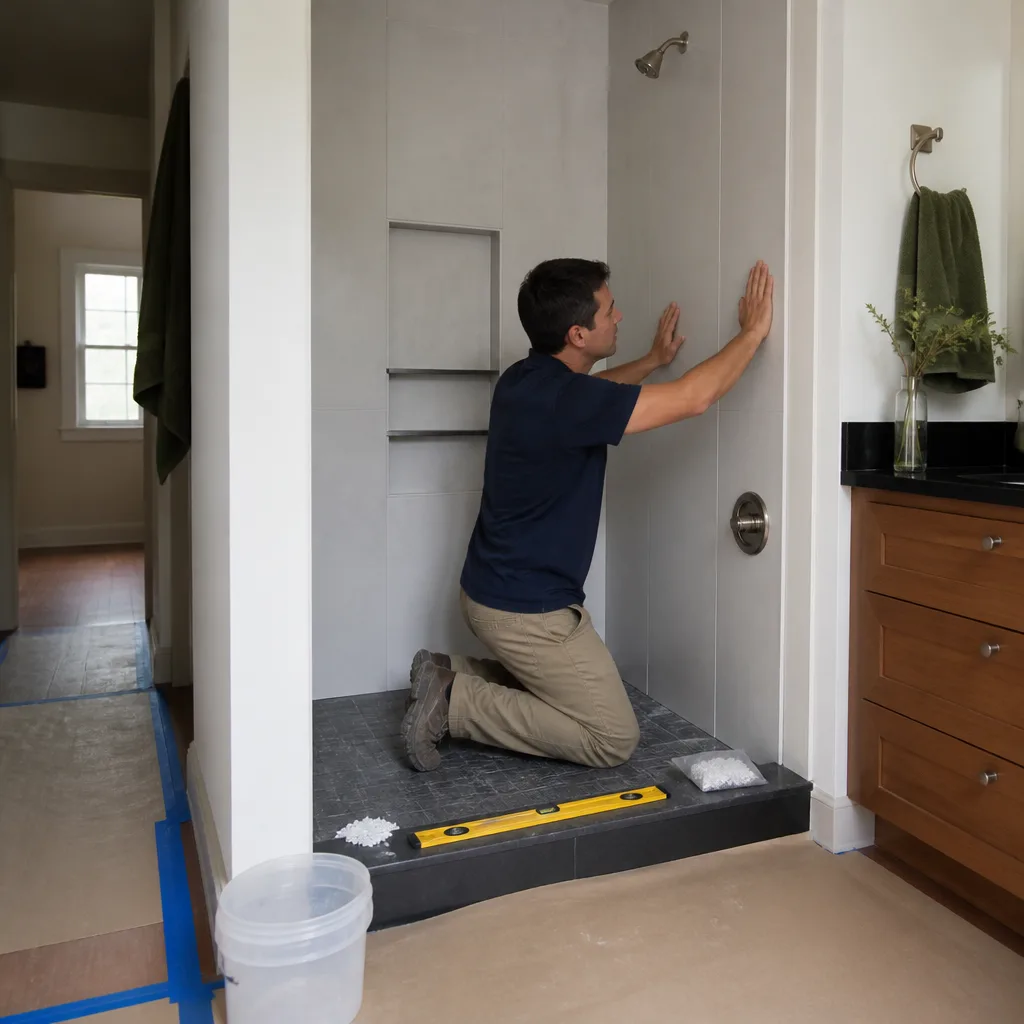
Bathroom remodeling warning signs are almost never about the tile or the vanity – they’re about sequence. Drywall before inspection, tile before waterproofing, a permit that never shows up, a substitute crew you weren’t told about, and a punch list with no holdback behind it. Every one of these is visible while the work is in progress, and that’s when it’s cheapest to fix. If you know the correct order – demo, rough-in, inspection, waterproofing, backer, tile, finish – you can spot the skip before the wall closes. If you’re ready to start a Grand Prairie bathroom project with a written price, a permitted scope, and a full-year guarantee attached, you can reach Bradford Remodeling Co Grand Prairie through our Bradford Remodeling Co Grand Prairie home page. For a bigger project, see our Kitchen Remodeling in Grand Prairie work.
Call (888) 255-7593 for a free estimate. A live person answers, every time.
Written by the team at Bradford Remodeling Co Grand Prairie.